Ship releases like a product team, not a part-time platform team
dFlow gives startups a cleaner path from self-hosted ownership to managed scale, so your team can move from launch to growth without rebuilding its deployment workflow every quarter.
Faster product loops
Preview, validate, and ship without waiting on bespoke infra setup.
One control plane
Keep services, deploys, logs, and worker nodes in one operating surface.
Scale with confidence
Start on your own infrastructure, then add managed capacity when demand arrives.
Budget visibility
Give founders clearer cost lanes before cloud sprawl becomes a surprise.
Release lane
Health checks, role-aware access, release history, and deployment visibility stay in the same workflow your team uses every day.
What startup teams get back
The best startup infra does not ask your team to become accidental platform engineers. It shortens the path from shipping to learning to scaling.
Go from branch to preview to production without adding deployment ritual.
Keep founders, engineers, and operators aligned on one release surface.
Health checks, rollback paths, and release history stay attached to every launch.
Use your own worker nodes first, then add managed capacity only when needed.
Built for the messy middle between launch and scale
dFlow gives startup teams one operating rhythm for launches, infrastructure ownership, and managed scale without forcing a premature platform migration.
Preview every release path
Create a cleaner route from pull request to production so product and engineering can review changes before they land.
Run app, data, and infra in one lane
Keep services, databases, environment config, and rollout history attached to the same application surface.
Ship with rollback and health guardrails
Protect launches with health checks, deployment visibility, and a fast way back when something misbehaves.
See the system your team is operating
Give founders, operators, and engineers shared visibility into runtime status instead of fragmented hosting dashboards.
Scale on your terms
Start on your own worker nodes, then add managed compute when demand is real instead of over-buying on day one.
Keep momentum as the product grows
Avoid rebuilding deploy workflows every time your architecture gets more ambitious or your team gets larger.
See the startup release path, not just the deploy button
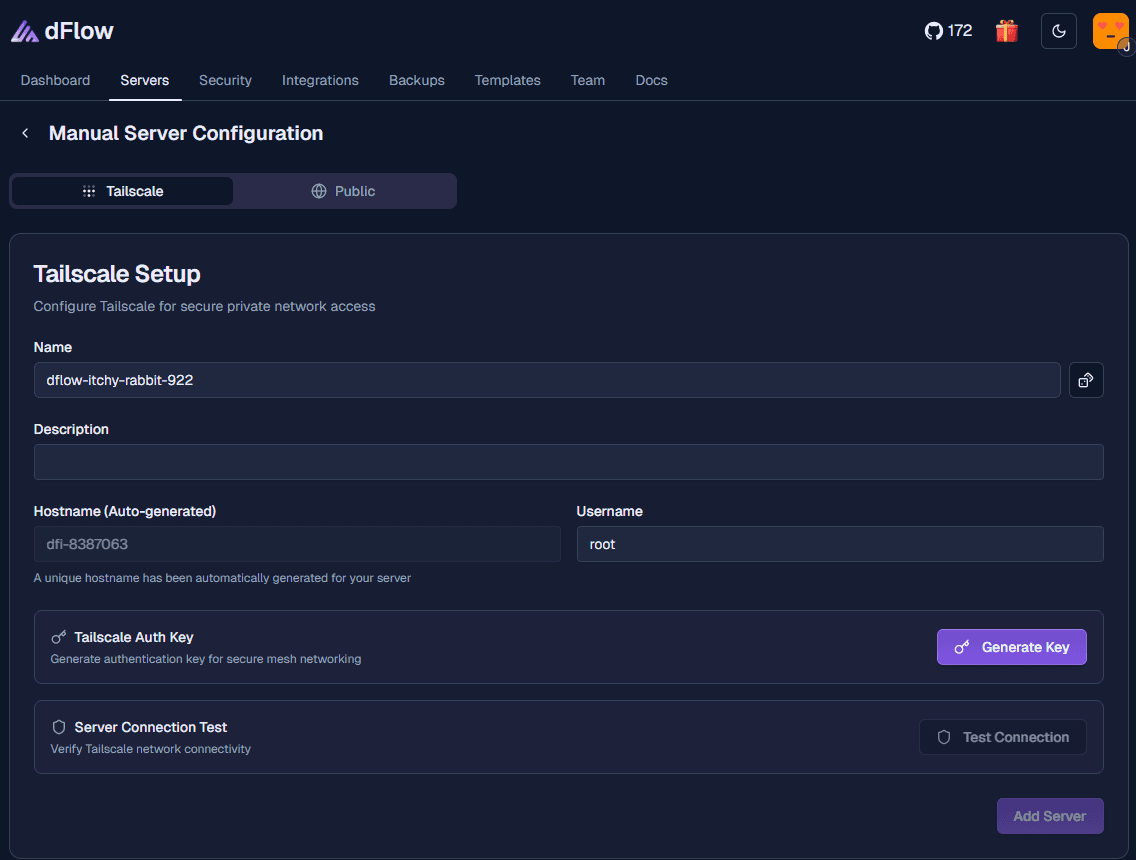
From connecting worker nodes to promoting a release, dFlow keeps the operational story visible enough for fast-moving startup teams to trust the next launch.